
Inside the Drone Defense Showdown: How Civilians Battle Rogue Drones with an Antidrone System, Jammers, Nets & High-Tech Tricks
- Burgeoning Drone Incidents: Unauthorised drones over stadiums, airports and other sensitive sites are on the rise. The NFL logged 2,845 rogue drone incursions over games in 2023 – a 12% increase from 2022 [1]. One security official warns that “the time to act to keep fans safe is now” [2], as authorities grapple with the growing threat.
- Booming Anti-Drone Arsenal: A wave of new counter-drone products – from radio jammers and GPS spoofers to net launchers, specialized radars and even drone “hijacker” hacking tools – promises to detect and safely neutralize unwelcome drones. These technologies can guard airports, stadiums, prisons and private properties without resorting to gunfire or other risky measures [3].
- Legal Gray Zone: Most civilian countermeasures emphasize non-lethal disruption or capture, since destroying a drone outright is legally considered destroying an aircraft – a federal crime in the U.S. [4]. Yet ironically, almost all high-tech anti-drone gear (jammers, spoofers, etc.) is forbidden to the general public under communications and aviation laws [5] [6]. This gap has prompted lawmakers to propose new rules giving police and critical infrastructure security teams greater authority to use counter-drone tools [7].
- High-Tech Drone Hijacking: Newer counter-UAS systems can effectively hack and commandeer a rogue drone in mid-flight. For example, Israel’s D-Fend EnforceAir platform detects an intruding drone, seizes control of its link, and safely lands it – allowing authorities to examine the captured device or return it to an oblivious owner [8]. These precise “cyber takeover” tools avoid physical damage, but they rely on up-to-date drone software profiles and may falter against encrypted or military-grade drones [9].
- Nets, Eagles, and Interceptor Drones: Physical capture methods bring together low-tech and high-tech. Security teams use handheld net cannons or deploy “drone hunter” UAVs that chase and ensnare an offending drone in mid-air, capturing it intact for evidence [10]. This avoids dangerous debris falling from the sky, though net solutions have limited range and can struggle against fast, agile targets [11]. (Notably, some law enforcement agencies even tried training eagles to pluck drones from the sky, but such programs have been largely discontinued for safety and practicality reasons [12].)
- Early Detection is Key: Many venues now deploy multi-sensor drone detection networks – combining micro radar units, RF scanners, cameras and acoustic sensors – to spot drones as early as possible. For instance, DroneShield’s new SentryCiv system for civilian sites uses passive radio-frequency scanners (that emit no signal) to detect and track drones without jamming [13]. Such passive detection avoids legal headaches and can even triangulate the drone’s controller location by its signals [14], buying critical time for responders.
- Civilian vs Military Methods: On the battlefield, militaries can knock drones out of the sky with high-power jammers, missiles or lasers. But in civilian airspace, safety and legality rule – you can’t just blow a drone out of the sky over a crowd. Powerful, wide-area jamming is “typically reserved for wartime use” and not deployed around cities due to collateral interference [15]. Instead, commercial anti-drone systems stick to limited-range jamming or controlled captures to avoid causing dangerous falling debris or mass signal blackouts [16].
- Changing Laws & Policies: Governments are racing to modernize drone laws. In the U.S., a 2018 law allowed only federal agencies (DOD, DHS, DOJ, etc.) to disable or destroy rogue drones, but new bipartisan bills in 2024 seek to expand counter-drone authority to local police, airports and critical infrastructure security teams [17]. Europe likewise is updating rules – for example, France deployed advanced drone spoofing systems to help protect the Paris 2024 Olympics from intrusions [18]. The overall trend is slowly granting more entities the legal green light to act against rogue drones, under strict guidelines, beyond just the federal or military level.
Introduction
Drones have become a double-edged sword in modern skies. On one hand, affordable quadcopters and DIY unmanned aircraft provide convenience and fun – delivering pizzas and filming weddings one day, for example. On the other hand, they are being misused to harass airports and trespass over sensitive sites like nuclear plants and prisons [19]. We’ve seen hobby drones smuggle contraband into prison yards and even disrupt major airports. (At the UK’s Gatwick Airport in 2018, rogue drone sightings forced a 30-hour shutdown, delaying 1,000 flights and affecting over 140,000 passengers [20].) On the battlefield, weaponized drones can be deadly, and experts warn that even off-the-shelf models pose serious spying risks – “an adversary can use an off-the-shelf drone they bought for $500 and find out what’s going on at U.S. nuclear weapons bases,” notes drone warfare analyst Zachary Kallenborn [21]. It’s no surprise that concerns about malicious drone use have spurred a scramble for ways to stop rogue drones in mid-air [22].
In response, a new industry of civilian anti-drone systems has exploded. These counter-UAS (Unmanned Aircraft System) solutions sound straight out of science fiction – radio jamming guns, GPS “spoofing” hackers that hijack a drone’s signals, net-launching cannons, even interceptor drones that hunt other drones – but they are very real and increasingly deployed. The promise is to detect and defeat unwelcome drones before they can spy, smuggle, or harm [23].
However, deploying such defenses outside a warzone is fraught with challenges. Safety and legality are paramount. Unlike the military, a stadium security team or airport police unit can’t simply shoot a drone out of the sky with bullets or missiles – doing so over a populated area would be extraordinarily dangerous and is usually illegal. In fact, most countries’ laws forbid damaging or disabling any aircraft (drones included) without proper authority, and jamming radio or GPS signals is heavily restricted by regulators [24]. As one analysis noted, aside from blasting the devices – which creates its own dangers – there was historically not much anyone could do once a drone intruded where it shouldn’t [25]. That is finally starting to change. Spurred by high-profile incursions (from the Gatwick shutdown to the surge of drones over NFL games), governments and tech companies have poured effort into creative countermeasures that can safely wrest back control of the skies [26].
This report provides an in-depth look at the drone defense showdown now underway in the civilian realm. We’ll examine the full arsenal of anti-drone technologies available, how they work and their pros/cons, the real-world use cases – from airports and stadiums to prisons and backyards – and the evolving legal framework governing their use. The goal is to understand how civilians (from law enforcement to private security and ordinary citizens) are battling rogue drones with everything from jammers and nets to high-tech tricks, and what comes next in this rapidly developing field.
The Spectrum of Civilian Anti-Drone Systems
Modern counter-drone setups generally involve two layers: detection (spotting and identifying the drone, and ideally locating its operator) and mitigation (neutralizing the threat by disabling or capturing the drone) [27]. Here we break down the main categories of anti-drone technology in use today – how they work, where they’re used, and their effectiveness and limitations.
Drone Detection Technologies
Before a rogue drone can be stopped, it must first be detected – which is often easier said than done. Small consumer drones are hard to pick up on conventional aircraft radars or by human observers. Thus, a range of specialized drone detection sensors have been developed. These are typically passive or non-destructive systems (legal for civilian use) that provide early warning and tracking of drones:
- Radar: Dedicated counter-drone radars can track the tiny radar cross-section of hobbyist drones that traditional air traffic radars would ignore [28]. They emit radio waves and detect the reflections off a drone to pinpoint its location and altitude. Pros: Radars offer long-range, 360° coverage and can track many targets simultaneously, day or night, unaffected by darkness or fog [29]. Crucially, radar can detect autonomous drones that aren’t emitting signals (which RF scanners might miss). Cons: Radar units are expensive and can struggle with clutter (e.g. distinguishing drones from birds or debris), requiring tuning and often pairing with other sensors to confirm a target. They also just show a blip – additional systems (like cameras) are needed to identify what the object is.
- RF Scanners: Many drones communicate via radio links (e.g. Wi-Fi or proprietary 2.4/5.8 GHz controls). RF analyzers passively listen for these control or video transmission signals. By scanning the spectrum, an RF detector can often sense a drone’s presence before it’s visible, and even identify the drone’s make/model or unique digital fingerprint in some cases [30]. Advanced systems can triangulate signals to locate the drone and its pilot if the pilot is nearby and transmitting [31]. Pros: RF detectors are completely passive (they emit no signals, so they’re legal and don’t interfere) and excel at spotting multiple drones and controllers in real time [32]. Cons: They cannot detect a drone that isn’t using a recognizable radio link (e.g. a fully autonomous pre-programmed drone) [33]. They also have limited range and can be overwhelmed in “noisy” RF environments (busy urban areas with lots of Wi-Fi/Bluetooth traffic). Keeping their signature library up to date is an ongoing challenge – new or modified drone signals may evade detection until the databases are updated [34].
- Optical Cameras: High-resolution electro-optical cameras (visual) and infrared cameras (thermal) are used as “drone spotters,” often augmented by AI object recognition software. These are usually mounted on pan-tilt mounts or paired with radar so they can zoom in on a suspected drone once cued. Pros: Cameras provide visual confirmation – you can literally see and identify the drone model and check if it’s carrying any payload (like a package or something dangerous) [35]. They also record video/images as evidence, which can help in prosecutions or forensic analysis [36]. Cons: Optical systems are highly dependent on weather and lighting – darkness, fog, glare, or distance can all thwart camera detection [37]. They also can trigger false alarms (e.g. a bird or balloon might be misidentified by automated vision). In practice, cameras are rarely used alone for initial detection, but they are vital for confirming and tracking a drone after another sensor (radar/RF) spots it.
- Acoustic Sensors: Some setups use microphone arrays to “hear” the distinctive buzz of drone propellers. By filtering for the specific frequencies of drone motors, these systems can alert operators to a drone’s sound and roughly direction-find its location. Pros: Acoustic detectors can pick up drones that emit no radio signal (fully autonomous) and can even detect drones behind obstacles or trees – sound can sometimes travel where radar or vision is blocked [38]. They are also highly portable and passive (listening only) [39]. Cons: Acoustic sensors have short range (often only a few hundred meters) [40] and are easily foiled by loud environments – e.g. crowd noise, city traffic, or wind can mask the sound of a drone. Due to their limitations, acoustic systems are usually used to complement other sensors rather than as a primary detection method.
Modern anti-drone installations (for example, at a major airport or large public event) often use sensor fusion, combining several of the above technologies to improve reliability [41]. A typical layered setup might use RF scanning to detect a drone’s control signal and get an early warning, cue a radar to lock onto the moving object and track its flight, and then slew a camera to visually identify the drone and observe it. Software can then classify the drone type (maybe recognizing it as, say, a DJI Phantom vs a custom racing drone) and even attempt to pinpoint the pilot’s location via RF triangulation. The end goal, as law enforcement officials put it, is to “detect, track, and identify” any suspicious drone that enters the airspace [42] [43].
Importantly, detection alone is currently the most legally permissible action in many jurisdictions. Private security or critical infrastructure operators are generally allowed to monitor their airspace with sensors, even if taking direct action against a drone remains restricted or requires calling government agencies [44]. This reality has led to some products focusing purely on detection and alerting. For instance, DroneShield’s SentryCiv mentioned earlier is offered as a detection-only network that can integrate into existing security systems and provide early warnings “without the legal and operational complications” of jamming or physically intercepting the drone [45]. In short, you can’t stop what you don’t detect – so robust detection is the critical first layer of any drone defense strategy.
Jamming: Radio-Frequency Disruption
Once a rogue drone is detected, one of the most common neutralization methods is RF jamming. Jamming involves overwhelming the drone’s control and/or navigation frequencies with a blast of electromagnetic noise, effectively drowning out the signals the drone relies on [46]. Most consumer drones depend on two key links: a radio control link to the pilot’s remote and satellite signals (GPS/GLONASS) for navigation. A jammer can target either or both:
- Command-and-Control Jammer: This floods the radio control channels (2.4 GHz, 5.8 GHz, etc.) with interference. If done successfully, the drone loses contact with its pilot’s transmitter. Most drones in such a scenario will either hover and then land safely (fail-safe behavior), or immediately attempt to return to its takeoff point, or in some cases just descend where they are. In any case, the drone can no longer continue its mission.
- GPS Spoof/Jammer: Some systems also jam the drone’s GPS signals or even spoof them (more on spoofing in the next section). Jamming GPS can cause a drone to think it has lost navigation – many will hover in place or initiate a controlled descent if GPS is lost for too long.
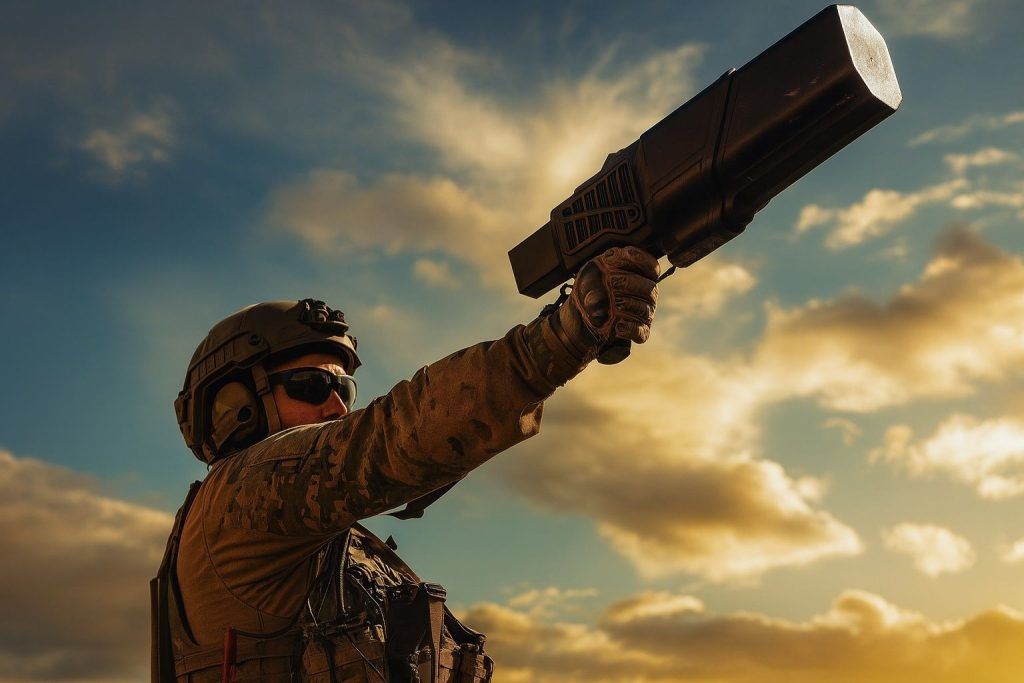
Pros: Jamming is relatively straightforward and highly effective against most off-the-shelf drones [47]. It doesn’t require knowing the make or model of the drone – if you blast the common frequency bands, you’ll likely sever its links. Police and military units have deployed handheld jammer guns (which often look like sci-fi rifles) that can force drones down from a safe distance. Jamming also works in real-time; as soon as a malicious drone is detected and deemed a threat, a targeted jam can often neutralize it within seconds by essentially cutting its puppet strings.
Cons: Jamming is a blunt instrument. An RF jammer will indiscriminately disrupt all signals in the targeted band, not just the drone’s link. As the U.S. Department of Homeland Security has noted, jamming not only blocks the drone’s control signal but can also interfere with “other electromagnetic signals used by telephones, emergency responders, air traffic control and the internet” in the area [48]. In a crowded urban environment, a powerful jammer could knock out Wi-Fi networks or disrupt police/fire communications – a serious collateral risk. Because of these dangers, jammers are illegal for anyone except certain federal agencies to use in the U.S. (and similarly restricted in many countries) [49]. Even when authorized, operators must use them carefully to minimize unintended interference. Another limitation is range: handheld jammers might work a few hundred meters out. Drones beyond that range or operating autonomously might not be affected until they come closer.
Overall, RF jamming remains a popular countermeasure where it’s allowed – for example, U.S. federal security teams at events like the Super Bowl have jammer guns on standby [50]. But due to the legal restrictions and collateral concerns, jamming tends to be reserved for high-importance scenarios (critical events, military bases, etc.) or used in emergencies by specialized units. It’s effective, but in peacetime civilian settings it’s used with caution.
Spoofing and “Cyber” Takeovers
A more surgical alternative to brute-force jamming is signal spoofing or protocol takeover – essentially hacking the drone in mid-air to gain control. Instead of simply denying the drone any signal (as jamming does), these systems send carefully crafted signals that mimic the drone’s own controller or GPS satellites, convincing the drone to do what the defender wants.
One approach is GPS spoofing: broadcasting a fake GPS signal that overrides the real one. For example, a system can make the drone believe it’s suddenly somewhere else, triggering its failsafe to land or go home. French defense firm Safran recently unveiled a system called “SkyJacker” that uses GPS spoofing to hijack a drone’s navigation; such a tool was reportedly part of France’s drone defenses during the 2024 Olympics [51]. GPS spoofers have to be very precise (broadcasting just the right signals so the drone doesn’t detect the trick), but when they work, the drone can be lured away or grounded quietly without anyone nearby realizing.
Another, more direct method is protocol takeover, often just called drone hacking. This entails exploiting the drone’s own communication link. If the defender knows the protocol a drone uses (and has the right equipment), they can send a command that binds to the drone as if they were its new controller. One of the leading systems in this category is Israel’s D-Fend Solutions “EnforceAir” platform. As the company’s chief marketing officer describes, “We detect the drone, we take control and we land it” [52] – effectively snatching the drone from its original operator mid-flight. The rogue drone can then be safely landed in a designated zone, intact and under the defender’s control. This not only neutralizes the threat but preserves the drone for forensic analysis (or to return to an innocent owner in case it was a mistake) [53].
Pros: Cyber takeover tools are extremely precise and non-destructive. They don’t create radio-frequency havoc across a wide area like jammers, and they bring the drone down in a controlled manner (no crash debris). This makes them ideal for scenarios where safety is paramount – e.g. over a packed stadium or airport, or an event with VIPs – and where you want to avoid any chance of collateral damage. They’re also covert; to an onlooker, it might simply appear that the drone decided to land on its own. These systems have been used by U.S. agencies and others especially when jamming is not feasible [54].
Cons: The biggest challenge is that you need to keep up with drone technology. A cyber takeover system relies on a library of drone “protocols” or software exploits. If a drone’s make/model isn’t recognized, or if the drone uses strong encryption or military-grade communication, a takeover might fail [55]. For instance, a custom-built drone or one with newly updated firmware could be immune to known takeover methods. These systems also tend to be expensive high-end solutions, often costing much more than simpler jammers or nets. Additionally, even a successfully hijacked drone will usually drop out of the sky if it loses power or if the hack only breaks its control link without taking over stabilization – so some systems carefully combine takeover with a bit of GPS spoofing or gentle landing protocols to ensure the drone doesn’t just tumble down. Finally, there are legal considerations: in some jurisdictions, hacking a drone could be seen as intercepting private signals or violating computer laws, so these tools are generally restricted to government use or authorized security teams.
Despite the challenges, “cyber takeover” defenses are viewed as a promising, high-tech solution. They exemplify how counter-drone warfare is increasingly becoming a battle of software and signals – essentially electronic warfare scaled down to the civilian level. When they work, it’s almost elegant: the rogue drone is quietly captured in mid-air without a scratch, and the public might never even know it was a threat.
Physical Capture: Nets and Interceptor Drones
In some scenarios, the most straightforward way to stop a drone is to physically grab it out of the sky – without using bullets or explosives. This has led to the development of various net-based capture systems and special interceptor drones.
One approach uses net launchers. Companies like OpenWorks Engineering (UK) make devices such as the SkyWall series – basically net bazookas. An operator shoulders the tube and fires a projectile that deploys a net in the air to entangle the target drone. Handheld net guns have been used by police in Japan, Europe and elsewhere to protect events. When a small drone is caught in the net, often a tiny parachute attached to the net will deploy, bringing the ensnared drone down to earth gently [56]. This prevents the drone from crashing into bystanders and keeps it intact for investigation.
Scaling up that idea, some firms use larger drones to catch drones. These interceptor drones carry a net that can be fired or dropped on the target. For example, U.S.-based Fortem Technologies deploys a DroneHunter UAV that autonomously chases rogue drones and shoots a net to snag them in mid-air [57]. The entangled prey can then be carried off or dropped once it’s neutralized. Police in the Netherlands and France have tested similar “drone-on-drone” capture techniques.
Pros: Physical capture methods have the big advantage of retrieving the rogue drone intact. This is valuable for evidence – you can examine the drone to see who made it, what its payload was, even recover fingerprints or serial numbers. It also definitively removes the threat (the drone is literally taken out of play, not just sent back to its operator). Nets and similar devices are largely non-lethal; they don’t involve firing traditional bullets or emitting wide-range interference. Thus, they can sometimes be deployed where guns or jammers shouldn’t be. For example, at events in Europe, police have used handheld net guns as a first line to avoid the risks of stray gunfire. And unlike jamming, a net capture doesn’t risk knocking out anyone’s phone signals.
Cons: The biggest limitation is range and speed. A net gun typically has an effective range on the order of tens of meters (maybe up to 100 meters for larger cannons). If a drone is hovering nearby, that’s fine – but if it’s loitering hundreds of meters up or quickly zipping across the sky, getting within net range is a challenge. Interceptor drones extend reach, but they require time to launch and chase the target, and they need to be faster and more agile than the drone they’re after. A clever or high-speed drone could potentially evade a net-carrying drone. There’s also the issue of multiple drones or swarm attacks – a single net can only catch one, so these methods don’t scale well if faced with several intruders at once. Additionally, even with nets, there’s some risk: a tangled drone will fall, albeit more slowly under a chute. And if it’s a large drone or carrying a hazardous payload, a fall can still be dangerous. For these reasons, net capture is often seen as a solution for lower-altitude, small drone incidents or as part of a layered defense (backing up jammers or detectors).
It’s worth noting one of the more exotic attempts in physical drone capture: trained birds of prey. In a few cases, law enforcement tried using eagles or hawks to physically grab drones out of the sky. Around 2016, Dutch police famously trained eagles to attack drones, reasoning that nature’s aerial hunters could dispose of rogue devices. While the eagles did manage to take down drones (the birds confuse them for prey and snatch them, often destroying the drone’s propellers), the program was largely discontinued. It turned out that flying drones can injure the birds from the sharp blades, and the eagles couldn’t always be directed reliably toward the target. The idea was fascinating but ultimately impractical and risky, so today nets and machines have taken over that job [58].
High-Energy and Emerging Countermeasures
Beyond jamming, hacking, and nets, there are a few other exotic anti-drone methods worth noting – some of which blur the line between civilian and military use:
- High-Power Microwave (HPM) Devices: These systems emit a directed electromagnetic pulse (EMP) or microwave burst to fry a drone’s circuits. Think of it as a localized thunderstrike of energy that zaps electronic components. For example, Germany’s Diehl Defence markets an HPM-based counter-UAS system that can disable drones within a certain radius [59]. Pros: If calibrated correctly, HPM can stop a drone instantly by essentially knocking out its electronics mid-air [60]. It’s also non-kinetic (no projectile or shrapnel) – the drone just falls. Cons: HPM devices are highly expensive and notably non-selective – any electronics in the blast area (nearby cars, phones, even pacemakers) could be disrupted or damaged as well [61]. And because a drone hit by EMP will simply drop, it shares the same issue of falling debris. Due to these risks, HPM/EMP weapons are mostly confined to the military or specialized agencies right now. Their use in civilian settings would be very limited, perhaps only to protect critical infrastructure in extreme scenarios.
- Lasers (Directed-Energy Weapons): High-energy lasers can be aimed to overheat and damage a drone’s vital components (like motors, sensors or battery). U.S. defense giants Lockheed Martin and Raytheon have demonstrated laser systems that shoot down drones in tests [62]. In a military context, lasers are appealing because they hit at the speed of light and can engage multiple targets quickly. For civilian use, we might see lower-powered “dazzler” lasers that blind a drone’s cameras as a non-lethal measure. But any laser strong enough to destroy a drone is basically military-grade and comes with big safety concerns. Pros: A sufficiently powerful laser can take out a drone very fast, and once the system is in place, each “shot” is just an expenditure of energy (no expensive missiles or ammo). Cons: High-power lasers are typically large, power-hungry, and expensive experimental systems [63]. They can pose serious eye hazards – a mis-aimed or reflected beam could damage the eyesight of pilots or people on the ground, or even hit orbiting satellites. Weather can also diminish a laser’s effectiveness (dust, fog, smoke can scatter the beam) [64]. Given those constraints, it’s unlikely we’ll see laser weapons deployed in civilian environments except perhaps to guard fixed sites with military oversight. International law also frowns on lasers that can cause blindness, so any use would be carefully weighed.
- Kinetic Interceptors (Projectile or Collision): Some agencies have tested small interceptor drones that ram into rogue drones at high speed – essentially kamikaze defenders. Others have looked at specialized munitions: e.g. shotgun shells that deploy a net or a cloud of pellets designed to entangle a drone’s rotors, or even anti-drone bullets that explode with minimal collateral damage. These are almost always military or law enforcement-only due to obvious safety issues in civilian areas [65]. They’re mentioned for completeness, but civilian drone defense generally avoids explosive or collision-based kills except in battlefield-adjacent situations.
- Novel Emerging Ideas: As the drone threat evolves, so do countermeasures. Researchers are exploring AI-controlled interceptor drones that can autonomously dogfight rogue drones with minimal human input (reaction speed is key, especially against fast or swarm attacks) [66]. Anti-swarm tactics are a hot area of R&D: if a swarm of hostile drones attacked, defenders might use a combination of wide-area HPM blasts and multiple interceptors or a swarm of defender drones in response [67]. Other creative concepts include using sticky foam projectiles to foul drone rotors, or directed acoustic devices (sonic weapons) to disrupt drones. These are not mainstream yet, but we could see some become practical in coming years – especially as regulators slowly open the door for more active defenses. For now, the cutting edge of civilian drone defense still relies on the core tools we’ve covered (detect, jam, hack, net), with lasers and microwaves mostly staying on the military side of the fence.
Effectiveness, Trade-offs, and Safety Considerations
Each type of counter-drone approach comes with trade-offs, and their effectiveness can depend on the scenario:
- Stopping Power vs. Risks: For single, small drones, tools like RF jammers or protocol takeovers have proven highly effective at quickly disabling the threat [68]. A well-aimed jammer gun or a successful cyber-hijack can neutralize a common quadcopter in seconds. Net guns and interceptor drones also work reliably if the drone can be engaged within their range (and these are especially useful when you want the drone preserved intact). However, against more complex threats – say a high-speed custom drone or a swarm of coordinated drones – the simple methods start to struggle. GPS spoofing or even high-power solutions like lasers and HPM might be theoretically more effective for advanced or multiple targets, but those tools are rarely available outside the military domain at present [69]. This is why detection is universally considered the foundation – without early detection and tracking, you might not even have a chance to deploy the right countermeasure in time [70].
- Safety and Collateral Damage: Different countermeasures carry very different collateral risks. Cyber takeovers and other passive measures (like merely tracking the drone) score best on safety – they either land the drone under control or just monitor it without physical intervention [71]. Nets are relatively safe as well; many net-capture systems cause the drone to parachute down slowly. Jammers and spoofers are a bit more risky: a jammed drone might crash if it doesn’t fail-safe properly, and a spoofed drone could be misled in unpredictable ways if the spoof isn’t perfect. Still, their effects are moderate and localized. At the high end, HPMs and lasers carry the greatest risk to bystanders – an EMP burst could fry random electronics or a misfired laser could pose an eye injury hazard [72] [73]. In civilian contexts like airports or downtown areas, there is a clear preference for non-kinetic, controlled outcomes. That’s why solutions which can coax a drone to land safely (hacking) or snare it (nets), or at least force it to go home or slowly descend (jamming), are emphasized. Blowing things out of the sky or unleashing wide-range energy beams is viewed as a last resort if used at all.
- Cost and Complexity: There’s also a huge cost spectrum in counter-drone tech. On the lower end, some tools are surprisingly affordable – a basic handheld net gun or a portable RF detector might be on the order of a few thousand dollars, within reach of a local police department’s budget. An enthusiast could even jury-rig a net launcher or signal detector with off-the-shelf parts for under $1k, though that’s more DIY than professional. But at the high end, an integrated multi-sensor detection system with advanced radars, cameras, and protocol takeover capability can run hundreds of thousands to millions of dollars for a single site like an airport [74] [75]. For example, a full setup to protect a major airport or stadium – with radar coverage, AI cameras, RF intercept, and intercept drones – might easily cost several million USD. Simpler setups (say a radar unit plus a jammer to cover a smaller facility) could be in the tens of thousands. An emerging trend is “Counter-drone as a service” where companies like DroneShield offer detection networks on a subscription basis [76], letting customers pay a monthly fee rather than a huge upfront cost. Over time, as the technology matures and competition increases, prices are expected to come down. But for now, high-end counter-UAS tech is a significant investment, typically justified for protecting critical infrastructure, major events, or high-risk sites.
- Legal Constraints: Perhaps the defining factor in how and where these systems are deployed is the legal and regulatory environment. As discussed, detection tech is generally legal and thus widely adopted – airports, arenas, and even some private companies have installed drone detection systems without much fuss. It’s common now for a stadium to have an array of RF antennas quietly listening for rogue drones during a game. But active countermeasures (anything that actually disables a drone) remain heavily regulated. In the U.S., until recently only federal agencies were clearly authorized to use such measures [77]. A patchwork of temporary exemptions has been used (for instance, DOJ and DHS teams deployed at major events, or the Department of Energy protecting nuclear sites), but local police and private security have had little authority. As of late 2024, Congress and the White House were pushing to expand these authorities [78]. Proposed bipartisan laws – e.g. the Counter-UAS Authorization Act of 2024 – aim to let state and local law enforcement use approved counter-drone systems at special events, and to allow critical infrastructure operators (like airports, power plants) to deploy vetted detection and mitigation tools under federal supervision [79] [80]. Elsewhere, Europe and other regions are also updating laws, typically granting police or homeland security units permission to use jammers or interceptors in defined scenarios (such as during national events or around airports), while still banning vigilantism by private individuals [81]. In short, private citizens and companies are not generally allowed to shoot down or electronically disable drones on their own – doing so could violate aviation laws (e.g. 18 USC §32 in the U.S.) and communications laws, resulting in serious penalties [82]. The proper protocol if a drone invades your property is usually to call the authorities and let trained, authorized teams handle it. Laws are slowly catching up to the need for drone defense, but until they do, most civilian deployments stick to detection and soft deterrence (like announcements or security presence) and then rely on law enforcement to actually intervene [83].
Real-World Use Cases: How Anti-Drone Tech Is Deployed
The challenges and preferred solutions can differ depending on the environment. Let’s look at a few key domains where rogue drones have become a concern, and how defenders are responding:
1. Airports: Airports worldwide have learned the hard way that even a single drone can disrupt thousands of travelers. The infamous Gatwick incident in 2018 (where alleged drone sightings shut London’s Gatwick Airport for over a day) was a wake-up call that led many airports to invest in counter-drone systems. The top priority at airports is early detection and avoidance of false alarms – they need to spot a drone as far out as possible, confirm it’s not a bird or balloon, and track it continuously. Thus, airports tend to use the best detection tech available: advanced 3D radars tuned for drones, wide-area RF scanners, and long-range PTZ (pan-tilt-zoom) cameras to visually identify intruders [84]. For mitigation, airports have been cautious. In most cases, if a drone is confirmed, airports halt air traffic as a precaution and call in law enforcement or military experts to respond (e.g. with jammer guns or by physically searching for the pilot). The risk of jamming near an airport is that it could interfere with aviation equipment, so many airports don’t deploy jammers routinely. Instead, some are now experimenting with interceptor drones or police drone teams that can chase intruders off the airfield without jamming [85]. Notably, the U.S. is moving toward empowering the Department of Homeland Security (DHS) to protect airports with counter-UAS measures – new legislation in 2024 was set to give DHS authority to act against drones around airports [86]. We will likely see more active defenses at airports soon, under strict control, as legal authority expands. But for now, the typical airport defense is a sophisticated detection network feeding real-time info to police or security, who then make the call on how to intervene (often by tracking the drone/pilot rather than immediately knocking it down, unless it poses imminent danger).
2. Stadiums and Large Events: Big sports events and concerts have become prime targets for careless or malicious drone pilots – from nosy fans with cameras to potential criminals. The challenge in stadiums is the dense crowds: a falling drone or any countermeasure gone awry could injure many people. Thus, detection and controlled responses are key. The major U.S. sports leagues (NFL, MLB, etc.) have been working with companies like Dedrone to monitor drone activity around games [87]. It was revealed that between 2018 and 2023, there were a staggering 121,000 requests for the FBI to deploy specialized counter-drone units to stadiums and other critical venues [88]. This shows how frequently drones are popping up where they shouldn’t. At high-profile games (like the Super Bowl or World Series), the federal government typically declares the airspace a No Drone Zone and brings in teams equipped with jammer guns and other tools to swiftly disable any drone that intrudes [89]. The NFL has lobbied strongly for more permanent legal solutions, warning that without expanded authority, stadiums “are at substantial risk from malicious and unauthorized drone operation” [90]. The ideal setup at a stadium is a portable RF detection system ringing the venue (to spot incoming drones) and a quick-reaction force on standby – often law enforcement officers with handheld jammers or net guns – ready to take down any drone that comes close to the crowd [91]. Some venues also use loudspeaker announcements and scoreboard messages to deter drone pilots (e.g. “If you fly here, your drone will be confiscated and you will be prosecuted”), just to make clear they’re serious. In general, event security leans on the feds for mitigation until laws let local authorities handle it; during the interim, detection and deterrence are heavily relied upon.
3. Prisons: Prisons have arguably been on the front lines of rogue drone incursions for years. Across the U.S., Europe, and elsewhere, people have used drones to smuggle contraband (drugs, phones, weapons) over prison walls. It’s a cat-and-mouse battle between corrections officials and smugglers. Many prisons have installed RF and radar detectors on the perimeter to get early warning of any drone approach [92]. When an incoming drone is detected, guards can scramble to the drop location to try to intercept the package or the drone itself. Some prisons have even put up physical anti-drone netting over exercise yards or other hotspot areas to literally block drones from flying in [93]. Mitigation is tricky, though: using jammers near a prison can interfere with legitimate radio communications or even bleed over to civilian cell networks nearby, so it’s not widely done except in isolated facilities (and only with special authorization). One promising approach for prisons is protocol takeovers – a system like EnforceAir (if legally allowed) could commandeer and force-land a contraband-carrying drone safely in a secure area, preventing the delivery [94]. Authorities also focus on catching the human operators: often the drone pilot lurks just outside the prison, so detection systems that can locate the pilot’s controller signal are very useful. There have been numerous busts where police nabbed perpetrators in the act of flying contraband runs. The scale of the problem is significant – in one jaw-dropping case, a gang in the UK coordinated 49 drone drops across at least five prisons, ferrying in an estimated £1 million (≃$1.3M) worth of drugs and phones before being caught [95]. Incidents like these have pushed prison authorities to urgently seek effective countermeasures. The current state of play: most prisons rely on detection and old-fashioned response (chasing down drones/pilots) because high-tech defeats are legally challenging. But as laws evolve, we may see more prisons outfitted with automated drone mitigation to guard the skies above inmates.
4. Private Properties and Personal Use: Finally, there’s the question of what an ordinary person or a private property owner can do about pesky drones. Say you have a drone repeatedly snooping over your backyard or a neighborhood drone flying low and buzzing people – what are the options? The reality is, options remain very limited for civilians. Shooting down a drone (even on your own property) is illegal in most jurisdictions as it violates aviation laws and property laws. Jamming a drone is also illegal for the public due to FCC regulations. So the average homeowner can’t deploy the fancy jammers or net guns we’ve discussed without running afoul of the law. The best advice is often to document the drone’s activity and call authorities if it’s truly a problem [96] [97]. Some creative individuals have attempted things like using water hoses, paintball guns, or even their own recreational drones to interfere with an intruder, but these approaches carry risks – you could damage someone’s property and be liable, or even injure someone if the drone crashes. There was at least one startup that marketed a so-called “drone repellent” device (using high-frequency ultrasonic noise to supposedly drive drones away like a dog whistle); however, its effectiveness is dubious and it raised its own legal questions. For privacy-conscious people, non-technical strategies can help – e.g. planting trees or using patio umbrellas to block the line of sight of cameras on drones, or using radio-frequency detector gadgets to get alerts if a drone is near (DJI for instance had a smartphone app that could warn of nearby DJI drones broadcasting telemetry). Enthusiasts have even experimented with “privacy drones” – small drones that would take off and confront an intruding drone, basically escorting it away or at least capturing video of it as evidence [98]. But again, if the defensive drone makes any physical contact or interference, it could be legally problematic. Until laws allow private citizens more leeway, personal anti-drone defense is mostly about detection and deterrence, not force. In essence: know if a drone is around, perhaps shield your yard, and involve law enforcement if it’s a serious harassment case. The hope is that as drone defense tech becomes more common, simpler consumer-friendly solutions (that are legal) might emerge for homeowners – but we’re not quite there yet.
Major Players and Products in the Counter-Drone Market
The rapid rise of rogue drone incidents has spawned a booming counter-drone industry, which now ranges from defense giants to agile tech startups. Here are some of the leading players and their notable anti-drone systems:
- Dedrone: A pioneer in drone detection technology, Dedrone (based in the US/Germany) offers a sensor-fusion platform called DedroneTracker that knits together RF scanners, radar, and cameras for comprehensive drone monitoring. In late 2022, Dedrone acquired a radio communications tech firm and launched the DedroneDefender, a handheld jammer, expanding from pure detection into mitigation. Dedrone’s equipment has protected high-profile events like the World Economic Forum in Davos. The company often provides “airspace security as a service,” using AI-driven detection algorithms. Notably, Axon (Taser’s parent company) partnered with Dedrone to bring drone detection capabilities to U.S. law enforcement agencies, integrating Dedrone’s tech with police workflows [99]. This reflects Dedrone’s focus on serving both government and commercial clients with user-friendly counter-UAS solutions.
- DroneShield: Originally from Australia (with a U.S. presence), DroneShield is known for its mixed approach of sensors and jammers. Its flagship DroneSentry system combines multiple sensors (RF, radar, acoustic, cameras) in a fixed installation for automated drone detection and tracking. For mitigation, DroneShield produces the DroneGun series – rifle-like jammer devices used to cut drones’ control and GPS links. DroneShield’s newest offering, DroneShield SentryCiv, is a civilian-oriented detection network designed to be cost-effective and completely passive (no jamming) for use at places like utilities, airports or stadiums [100]. DroneShield has collaborated with law enforcement and military units worldwide; their DroneGun Tactical jammer has been spotted in settings from the war in Ukraine (used by Ukrainian forces to down hostile drones) to U.S. police units on Super Bowl security duty [101]. In short, DroneShield bridges the high-end military grade and the civilian market, with an emphasis on flexible deployment (they offer both fixed installations and portable products).
- D-Fend Solutions: An Israeli company specializing in cyber-takeover technology. D-Fend’s EnforceAir system is a leading example of protocol takeover/cyber control in action. It creates a protective RF dome in which it can detect and hijack unauthorized drones by taking over their control link. EnforceAir has been adopted by U.S. federal agencies and others, particularly valued in situations where jamming is undesirable (e.g. busy airports or ceremonies where you don’t want to disrupt other signals) [102]. D-Fend often highlights case studies like VIP events where their system safely brought down drones without any disturbance. Their approach is basically a “high-end hacker in a box,” and D-Fend remains one of the top providers in this niche of the market.
- Fortem Technologies: A U.S.-based company that offers an end-to-end system combining detection and physical capture. Fortem’s SkyDome is a network of their proprietary small radars optimized for drone detection (these radars are compact, high-resolution and can be mounted around a facility). Once a threat is detected, Fortem can launch its DroneHunter UAV – an autonomous quadcopter interceptor that carries a net gun to snag the intruding drone [103]. Fortem emphasizes their radar tech’s ability to track drones in complex environments, and the DroneHunter’s successes in physically removing drones. Their systems have been used to secure venues in Asia and the Middle East, and Fortem has pitched them to airports as a way to remove drones without causing a crash. This active interception capability sets Fortem apart in the market, essentially offering an automated drone-on-drone dogfight solution.
- OpenWorks Engineering: Hailing from the UK, OpenWorks gained fame for its SkyWall net capture devices. The SkyWall 100 is a shoulder-fired net launcher, while the SkyWall 300 is a larger automatic turret that can fire nets at drones. OpenWorks’ technology is simple but effective, and has been tested by militaries and used by police units in Europe for event security. They represent the leading edge of kinetic capture tech (minus using another drone). If one sees a police officer with a backpack and a tube firing a net at a drone, it’s likely an OpenWorks device. These systems appeal to those who want a non-electronic, non-lethal solution that doesn’t involve jamming – for example, protecting an open-air public event where you just want to quickly bring down a drone intact.
- Big Defense Contractors (Leonardo, Thales, Rafael, Saab): Several major defense firms have developed integrated counter-UAS systems, primarily for military and national security customers, which are now trickling into civilian security use. For instance, Italy’s Leonardo offers the Falcon Shield system and Israel’s Rafael developed Drone Dome – both combine radars, cameras, jammers, and in Drone Dome’s case even an optional laser weapon. These systems got a lot of attention after incidents like Gatwick 2018, when airports and governments were scrambling for turnkey solutions [104]. The UK purchased Rafael’s Drone Dome to protect airports after Gatwick. Such systems tend to be high-cost and oriented toward military or high-end police units (for example, Drone Dome was deployed to protect the 2018 NATO summit). They often incorporate classified-tech components and are sold government-to-government. However, their presence shows how the military-to-civilian tech transfer is happening: the same companies making battlefield anti-drone gear are repurposing it for homeland security missions.
- U.S. Defense Giants (Lockheed Martin, Raytheon): These companies are developing the cutting-edge directed-energy and electronic warfare tools for drones. Raytheon, for example, has a prototype microwave weapon called PHASER that can disable swarms of drones with pulses, and Lockheed Martin has showcased a laser system named ATHENA shooting down drones in tests [105]. While these aren’t products you can go out and buy on the commercial market, they influence the field. Notably, technology from these programs sometimes filters down: for instance, a portable jammer known as DroneDefender was developed by Battelle for the U.S. military and used in combat zones years ago, but only recently have similar devices (like Dedrone’s Defender) become available to domestic law enforcement [106]. This lag is due to regulatory hurdles and the need to adapt military tech to civilian standards (FCC approval, etc.). Lockheed and others also partner with smaller counter-drone firms – e.g. Raytheon has worked with Dedrone on U.S. defense contracts. So while you won’t see “Raytheon anti-drone kit” sold to a stadium, these big firms are quietly present via partnerships and R&D in the background.
- Other Innovators: The ecosystem includes many smaller specialist companies. Black Sage Technologies (USA) provides command-and-control software that fuses data from various sensors (often used in fixed-site protections). SkySafe (USA) has developed systems focusing on drone tracking and defeat via tapping into drone telemetry (they’ve worked with U.S. prisons and airports, and also offer drone monitoring as a remote service). MyDefence (Denmark) makes very portable RF detectors and wearable jammers for dismounted soldiers or police – think of a jammer that could be worn on an officer’s vest or mounted on a vehicle [107]. Aaronia (Germany) produces advanced RF spectrum analyzers and antenna arrays used at events like the World Cup for drone detection. Cerbair (France) similarly specializes in RF detection and has protected sites like G7 meetings. TRD (Singapore) makes the Orion series jammer guns that have been adopted by some police forces in Asia for event security [108]. And new startups continue to enter the fray, especially as drones themselves evolve. It’s a dynamic space, with the market expected to grow dramatically – forecasts estimate the global anti-drone market will swell from just a few billion dollars today to over $10–15 billion within the next decade, driven by demand from both the commercial sector and civilian government agencies [109].
In summary, the counter-drone industry is growing and maturing quickly. Initially dominated by a few defense contractors, it’s now a diverse mix of companies each carving out niches (be it detection software, jammer hardware, intercept drones, etc.). This competition and innovation bode well for those who need protection from rogue drones, as solutions are becoming more effective and, gradually, more accessible.
Conclusion
Only a few years ago, the idea of routinely needing “anti-drone” defenses at airports, sports games, or critical facilities might have sounded like science fiction. Today, it’s an accepted reality that the era of drones has ushered in the era of the anti-drone. The cat-and-mouse game between drone operators (whether careless, criminal, or hostile) and those tasked with stopping them is well underway, and both technology and policy are racing to catch up.
We’ve seen that no single silver bullet exists – rather, effective drone defense is about layered solutions: detect the intruder, decide on the appropriate countermeasure, and respond in a way that neutralizes the threat while minimizing new risks. In civilian skies, that usually means favoring methods that don’t involve explosions or high collateral damage. A phrase often repeated in this field is “proportionate response” – using just enough force to deal with the drone problem and no more. This is why the emphasis has been on clever, often non-lethal techniques: hack it, jam it, net it, or scare it off, rather than blow it out of the sky (except in the most extreme circumstances).
Legally, the frameworks are gradually adapting. 2018’s authorities in the U.S. were a starting point, essentially acknowledging the problem; the subsequent years have been a scramble to grant more agencies and local entities the ability to act. As of late 2025, legislation to expand counter-drone authority is moving forward, albeit slowly [110]. Likewise, countries in Europe and Asia are enacting laws to empower police and security services to deploy these high-tech tools at major events or around vital sites. With each incident – be it a drone halting airport traffic or dropping contraband into a prison – the pressure mounts on regulators to enable faster and more decisive countermeasures.
On the technology front, we can expect to see existing methods refined and new ones emerging. Drones will likely get quieter, more autonomous, and possibly swarm-capable; anti-drone systems will in turn explore AI, automation, and higher-power options within safe limits. It’s an arms race, but also a necessity as drones become ubiquitous. The hopeful trajectory is that, much like we have airspace rules and air defenses for traditional aircraft, we will integrate drone defenses into the fabric of public safety. Future large events might have anti-drone teams as routinely as they have metal detectors and CCTV. Critical infrastructure might come standard with drone detection networks.
In the end, drones are here to stay – and so is the challenge of managing them. The good news is that technology and policy are rising to the challenge: from stadium security chiefs and federal agents, to engineers at startups and lawmakers in Congress, many are working to ensure that the benefits of drones can be enjoyed without opening the door to chaos above our heads. The showdown between civilians and rogue drones is on, and round by round, the defenders are gearing up with smarter, safer strategies to win back the skies. [111]
References
1. www.reuters.com, 2. www.reuters.com, 3. ts2.store, 4. jrupprechtlaw.com, 5. jrupprechtlaw.com, 6. jrupprechtlaw.com, 7. ts2.store, 8. ts2.store, 9. ts2.store, 10. ts2.store, 11. ts2.store, 12. ts2.store, 13. ts2.store, 14. ts2.store, 15. ts2.store, 16. ts2.store, 17. ts2.store, 18. ts2.store, 19. www.courthousenews.com, 20. www.flightglobal.com, 21. www.courthousenews.com, 22. www.courthousenews.com, 23. ts2.store, 24. ts2.store, 25. www.courthousenews.com, 26. ts2.store, 27. ts2.store, 28. ts2.store, 29. ts2.store, 30. ts2.store, 31. ts2.store, 32. ts2.store, 33. ts2.store, 34. ts2.store, 35. ts2.store, 36. ts2.store, 37. ts2.store, 38. ts2.store, 39. ts2.store, 40. ts2.store, 41. ts2.store, 42. ts2.store, 43. www.courthousenews.com, 44. ts2.store, 45. ts2.store, 46. ts2.store, 47. www.courthousenews.com, 48. www.courthousenews.com, 49. jrupprechtlaw.com, 50. ts2.store, 51. ts2.store, 52. www.courthousenews.com, 53. ts2.store, 54. ts2.store, 55. ts2.store, 56. ts2.store, 57. ts2.store, 58. ts2.store, 59. ts2.store, 60. ts2.store, 61. ts2.store, 62. ts2.store, 63. ts2.store, 64. ts2.store, 65. ts2.store, 66. ts2.store, 67. ts2.store, 68. ts2.store, 69. ts2.store, 70. ts2.store, 71. ts2.store, 72. ts2.store, 73. ts2.store, 74. ts2.store, 75. ts2.store, 76. ts2.store, 77. ts2.store, 78. ts2.store, 79. ts2.store, 80. ts2.store, 81. ts2.store, 82. ts2.store, 83. ts2.store, 84. ts2.store, 85. ts2.store, 86. ts2.store, 87. ts2.store, 88. ts2.store, 89. ts2.store, 90. ts2.store, 91. ts2.store, 92. ts2.store, 93. ts2.store, 94. ts2.store, 95. www.wired.com, 96. ts2.store, 97. ts2.store, 98. ts2.store, 99. ts2.store, 100. ts2.store, 101. ts2.store, 102. ts2.store, 103. ts2.store, 104. ts2.store, 105. ts2.store, 106. ts2.store, 107. ts2.store, 108. ts2.store, 109. ts2.store, 110. ts2.store, 111. ts2.store


