CONFINED-SPACE INSPECTION
Inspect difficult interiors before sending people inside
Collision-tolerant indoor drones can capture visual, thermal, LiDAR and thickness data in tanks, vessels, tunnels and process equipment—supporting safer planning and more focused human intervention.
REMOTE ACCESS, STRUCTURED EVIDENCE
A first view into spaces that are costly or hazardous to enter
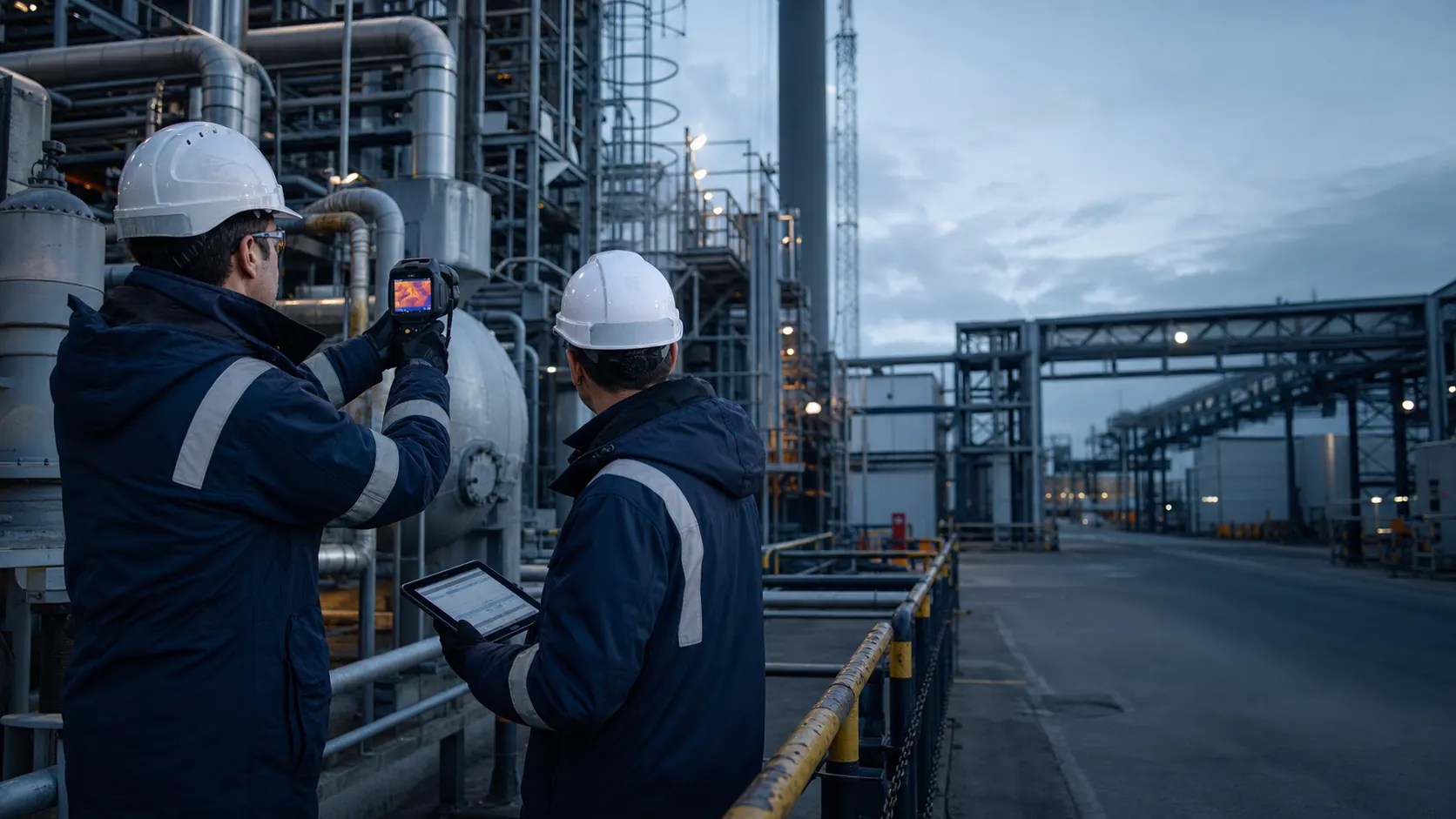
Remote inspection can help teams understand internal geometry, identify areas of interest and plan scaffolding, cleaning, isolation or entry around evidence rather than assumption. It does not eliminate the need for competent safety and integrity decisions.
Pressure vessels
Boilers and furnaces
Tunnels and shafts
Sewers and culverts
Marine and offshore interiors
CURRENT PLATFORM EXAMPLE
Flyability Elios 3 inspection architecture
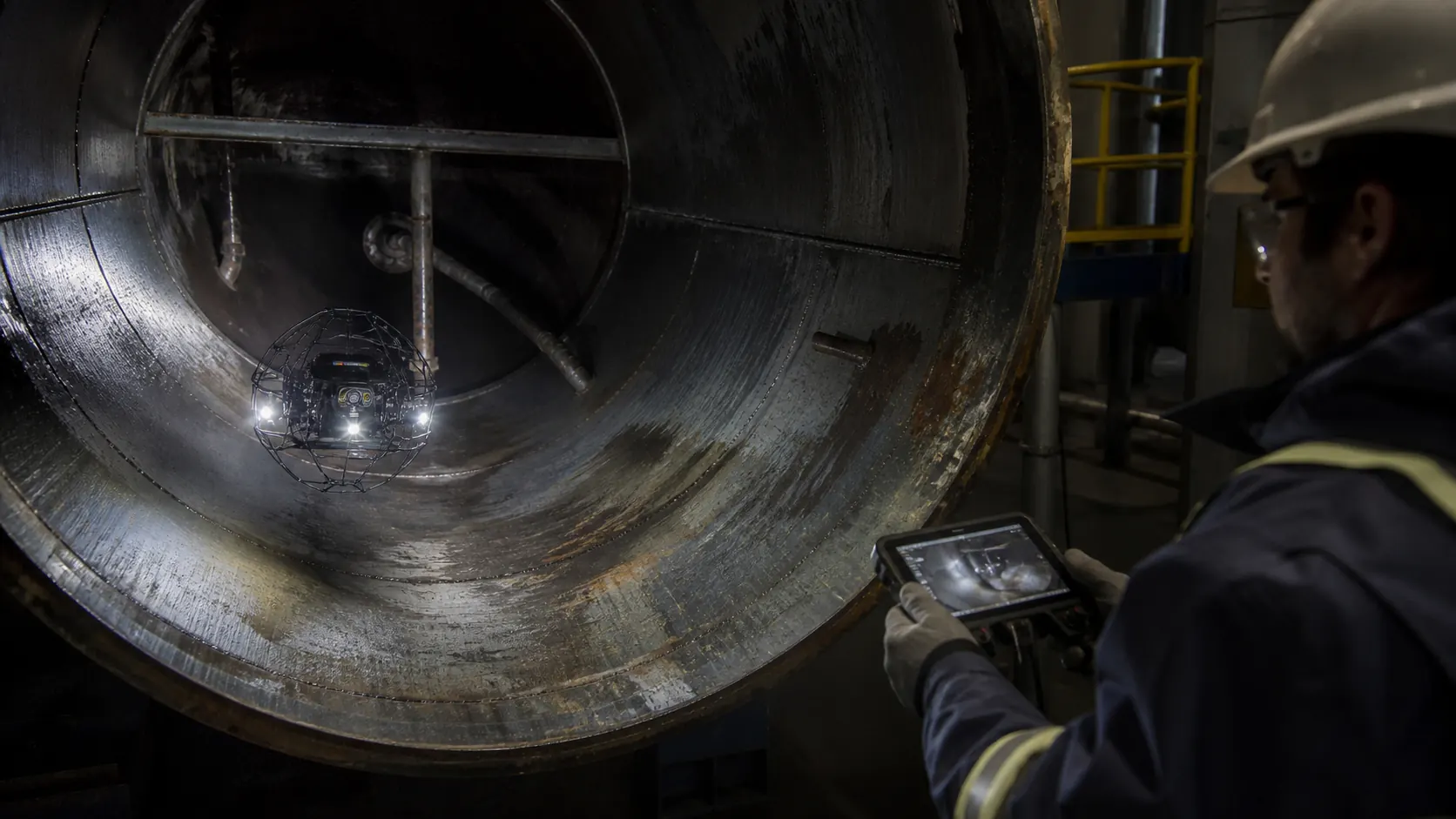
Elios 3 is a collision-tolerant indoor inspection platform designed for inaccessible industrial spaces. A protective cage, onboard lighting, stabilisation and dedicated inspection software support close visual work where a conventional open-frame aircraft would be unsuitable.
- Visual inspection with location-aware review and reporting
- LiDAR capture for spatial context and repeatable navigation
- Surveying configuration for digital records of difficult interiors
- UT payload for location-tagged ultrasonic thickness measurements
- Battery and tethered-power options selected around access and mission duration
CHOOSE THE EVIDENCE
Different questions require different payloads and preparation
A rapid visual survey, a dimensional record and a wall-thickness campaign are separate missions. Surface condition, cleanliness, lighting, access geometry and expected defects determine what can be captured reliably.
Visual condition
Document coatings, corrosion, weld areas, deposits, deformation and internal components with a planned route and consistent observation naming.
Spatial context
Use LiDAR to orient imagery and observations within the asset, support dimensional understanding and create a navigable record for remote teams.
Thickness measurements
Plan UT contact locations, surface preparation, probe selection, couplant, calibration and engineering review before treating measurements as integrity evidence.
INDUSTRIAL APPLICATIONS
Where remote inspection can change the access plan
Process and storage assets
Inspect tanks, vessels, reactors, ducting and pipe galleries to establish condition and target later cleaning, access or non-destructive testing.
Power generation
Review boilers, stacks, combustion spaces and other internal structures during planned outages or preliminary condition assessments.
Civil infrastructure
Capture tunnels, culverts, shafts, sewers and technical chambers where geometry, access distance and communications must be planned carefully.
Marine interiors
Document ballast tanks, holds and enclosed structural areas subject to vessel procedures, surface condition and communications constraints.
MISSION DESIGN
Four decisions before the aircraft enters the asset
Risk
Review isolation, atmosphere, temperature, contamination, access, recovery and emergency arrangements.
Objective
Define the defect indicators, coverage, measurement points, location requirements and acceptance method.
Platform
Select payload, lighting, batteries or tethered power, communications and recovery equipment.
Report
Structure media, measurements, spatial context, limitations and findings for competent review.
DISCUSS A CONFINED-SPACE INSPECTION
Tell us what is inside the asset—and what must be established
Share the asset type, country, access dimensions, internal geometry, known atmosphere and temperature, inspection objective, preferred output and timeline. TS2 Space will help define a suitable platform and data workflow.
Equipment availability, configuration, permitted use and delivery depend on destination, end use, site conditions and the agreed project scope. Safety procedures, technical performance and commercial terms are confirmed individually.


