
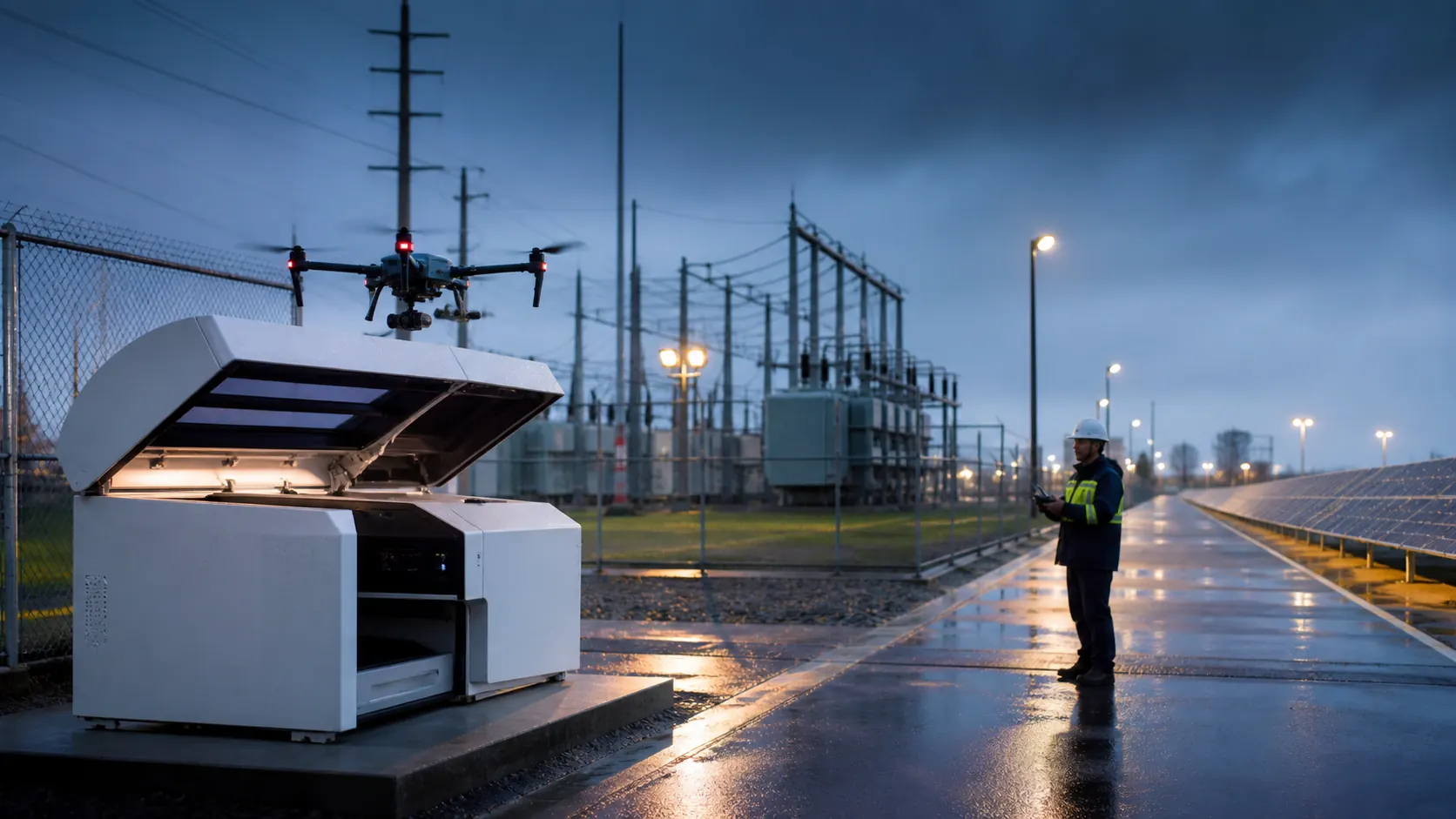
AUTOMATED INFRASTRUCTURE INSPECTION
Repeatable aerial inspection without rebuilding the workflow each time
A remotely managed drone station can turn occasional site visits into a planned inspection programme—combining consistent capture, visual and thermal data, operational controls and a traceable record of change.
PROGRAMME, NOT A DEMO FLIGHT
Automation begins with the inspection objective
A docked aircraft is valuable when routes, sensors, alert thresholds, data review and human responsibilities are designed around an asset-management process. TS2 Space helps connect the field system to that complete operating model.
Power infrastructure
Rail and transport
Construction sites
Industrial assets
Emergency assessment
CURRENT PLATFORM EXAMPLE
DJI Dock 3 with Matrice 4D or 4TD
DJI Dock 3 is a current “drone in a box” platform designed for remote enterprise operations. It can work with Matrice 4D for high-resolution visual capture or Matrice 4TD when thermal imaging is part of the inspection method.
- Weather-resistant dock and aircraft designed for outdoor deployment
- Automated charging, mission execution and data transfer
- Wide, medium-tele and tele cameras for repeatable visual inspection
- Thermal imaging on Matrice 4TD for appropriate diagnostic workflows
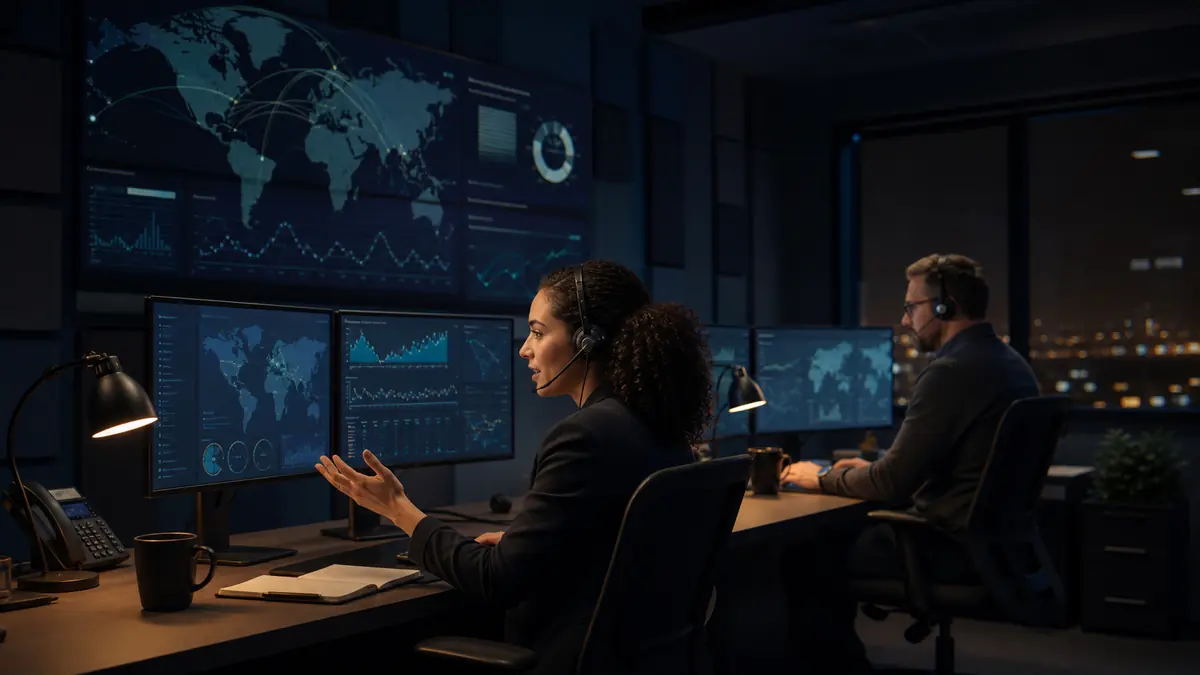
- Remote planning, supervision and data management through FlightHub 2
SYSTEM COMPONENTS
Every deployment needs more than the dock
The site, aircraft, communications, software and operating procedures must be designed as one service. A weakness in any layer can make an otherwise capable platform unsuitable.
Site infrastructure
Foundation, power, grounding, weather exposure, safe take-off volume, physical access and maintenance arrangements are assessed before installation.
Connectivity and control
Primary and backup communications, remote supervision, cybersecurity, user roles and incident procedures are matched to the importance of the asset.
Data workflow
Mission outputs must reach the right people in a usable form, with defined retention, review, escalation and integration into maintenance or project systems.
REPEATABLE FIELD INTELLIGENCE
Where scheduled and event-driven missions add value
Energy sites
Record solar arrays, substations, switchgear areas and access routes consistently, combining visual review with thermal capture where the method and conditions support it.
Transport infrastructure
Monitor rail facilities, bridges, depots, earthworks and corridor assets through repeat missions designed around safe airspace and operational windows.
Construction and industrial sites
Create comparable progress records, review stockpiles and access conditions, and provide remote teams with current visual context between site visits.
Post-event assessment
After severe weather or an operational incident, a predefined mission can provide rapid situational data while keeping people away from an area until conditions are understood.
DEPLOYMENT READINESS
Four workstreams before routine operations
Inspect
Define the assets, defect indicators, mission frequency, sensor conditions and required human review.
Engineer
Survey the dock site, communications, power, weather exposure and safe mission volume.
Authorise
Prepare the operational concept, risk assessment, airspace coordination and permissions required for the location.
Operate
Train responsible staff, establish supervision and escalation, and maintain aircraft, dock, software and records.
PLAN AN AUTOMATED INSPECTION
Tell us which assets need a repeatable view from above
Share the country, site type, inspection objective, expected mission frequency, available power and connectivity, and proposed timeline. TS2 Space will help define a suitable technical and operational architecture.
Equipment availability, configuration, permitted use and delivery depend on destination, end use, local regulation and the agreed project scope. Operational approvals remain the responsibility of the aircraft operator. Commercial terms are confirmed individually.


